
Home / How long to practice
A guide for parentsHow Long Should a Child Practice? A Guide by Age
Short and often beats long and rare. At La Verne Music School, a good starting point is about 10 minutes a day for 5- and 6-year-olds, 15 to 20 minutes for ages 7 to 9, 20 to 30 minutes for ages 10 to 12 and 30 minutes or more for teens, five days a week. Your child’s teacher will adjust it to their goals.
Practice time at a glance
Treat these as a starting point. Five focused minutes count for more than twenty distracted ones, and two short sessions are fine if one long one is a struggle.
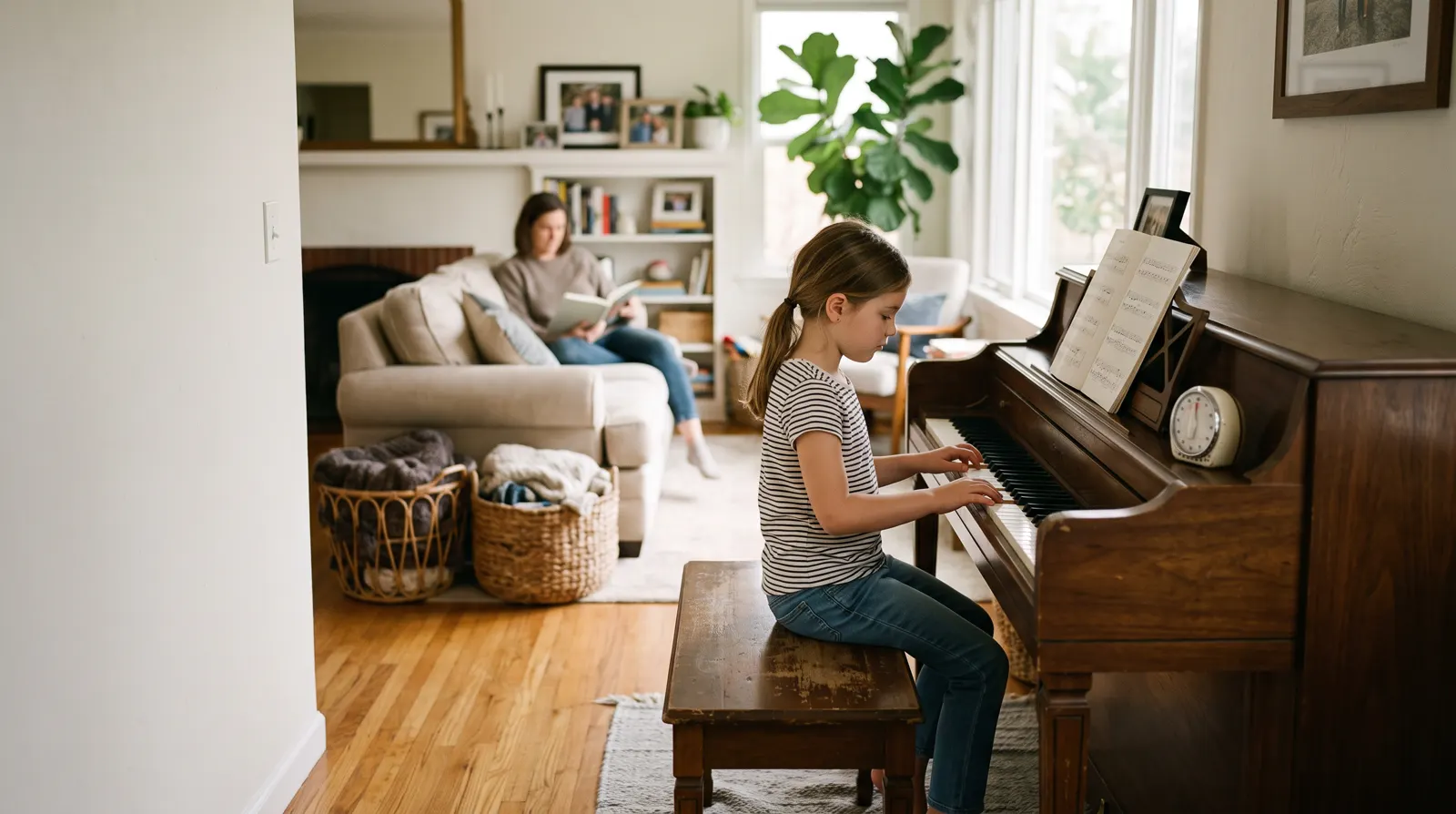
| Age | Minutes a day | Days a week | What a session looks like |
|---|---|---|---|
| 5 to 6 | About 10 | 5 | Play this week’s song or exercise a few times, with a parent nearby to help and cheer. |
| 7 to 9 | 15 to 20 | 5 | A quick warm-up, the new material, then something they enjoy as a reward. |
| 10 to 12 | 20 to 30 | 5 | Warm-up, the hardest spots first, then full run-throughs of pieces. |
| Teens | 30 to 45+ | 5 to 6 | Technique, new pieces and performance practice, planned with their teacher. |
| Adults | 20 to 30+ | As many as fit | Short, regular sessions beat one long weekend session. |
How long should a 7 year old practice piano?
About 15 to 20 minutes a day, five days a week, is plenty for most 7-year-olds. If that’s too much in one go, split it into two short sessions, for example 10 minutes before school and 10 after dinner. Consistency matters far more than length.
How long should you practice piano per day?
It depends on age and goals. Young beginners need 10 to 20 minutes, older kids 20 to 30, and teens working toward performances or auditions often practice 30 to 60 minutes. Adults learning for fun do well with 20 to 30 minutes most days.
What is the 80/20 rule for piano practice?
It usually means spending most of your practice time, about 80 percent, on the small part of a piece that’s hardest, instead of playing the easy parts over and over. Find the tricky few bars, work on them slowly, then play the whole piece.
Ask your child’s teacher which spots to focus on each week. It’s right there in the parent portal.
How the parent portal helps
Our online parent portal shows exactly what your child worked on in each lesson and what to practice at home, any time of day. You don’t have to guess, and your child doesn’t have to remember everything the teacher said.
Practice tips from our blog: a practice schedule for busy families, practice without the battle and keeping your child motivated.
Should I let my 12 year old quit piano?
Not before you find out why. Most kids who want to quit are in a normal dip: the music got harder, practice got boring or school got busy. That usually passes with a new piece they love or a fresh goal. A real plateau, months of no progress and no interest, may mean it’s time for a change.
Talk to their teacher first. Often the fix is a different style of music, a new goal like a recital, or even a different instrument. Lessons are month to month, so there’s never pressure to stay in something that isn’t working.
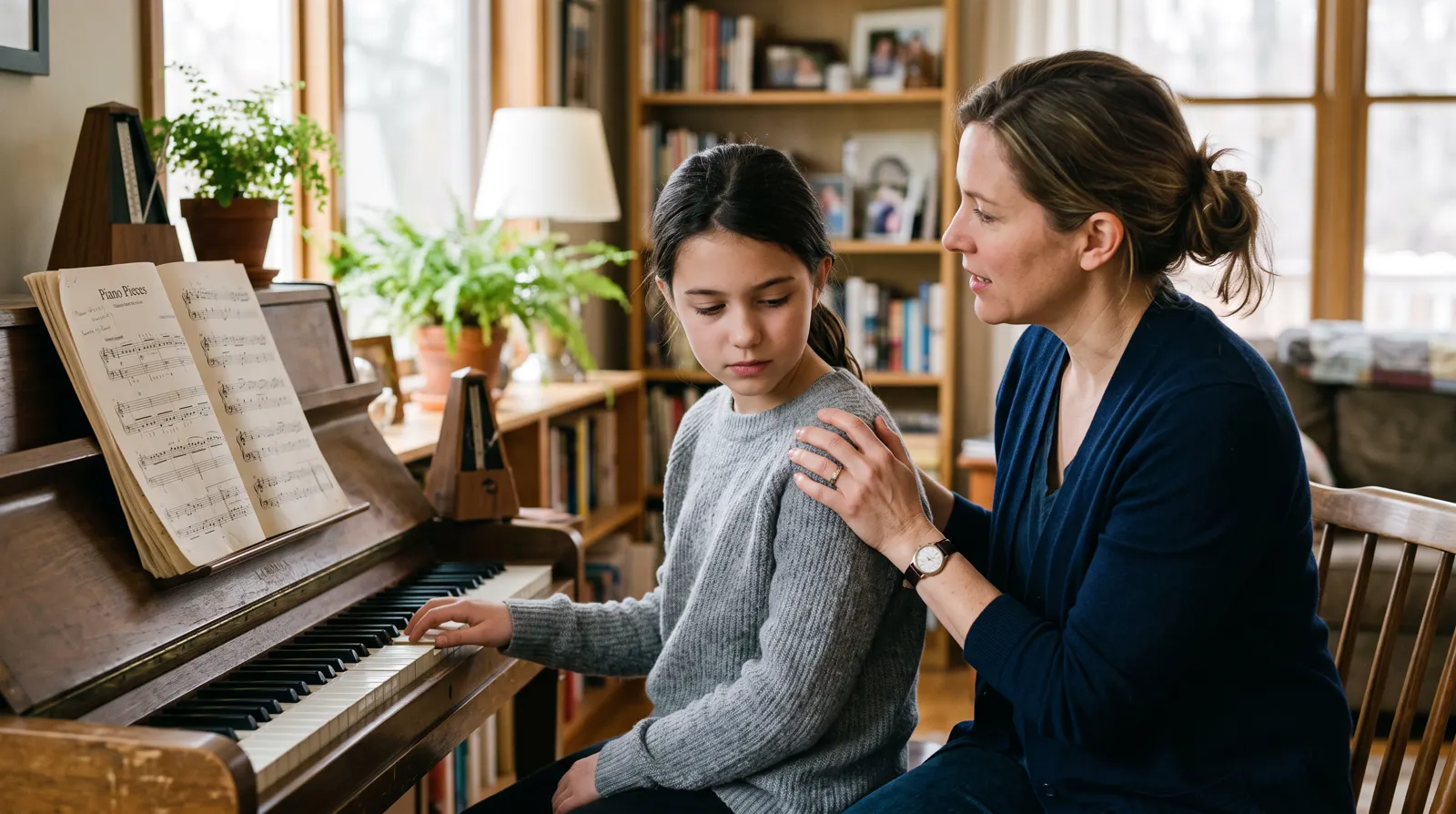
A normal dip, or a real plateau?
- Normal dip: complains about practice but still enjoys lessons or performing.
- Normal dip: frustrated by one hard piece.
- Real plateau: months without progress, even with regular practice.
- Real plateau: no interest in any music, style or goal you try.
Last updated October 23, 2026.
More answers for parents
Lessons for every instrument
Practice goes better with a plan.
Every student gets a weekly practice plan from their teacher in the parent portal. 50% off your first month of lessons, now through October 31!